General Information
Workshop — Dec 6, 2025: 10AM to 12PM Presentation from — Sonny Green @ www.sonny.photos. Meeting place — Clerks Coffee Company (Emeline Hotel) 181 Church St, Charleston, SC 29 401, USA (Meet at the four chairs in the middle of the coffee shop). If you are late text, 843-843-6542 to find us.
Price: $50 per-person
READ FIRST: How to Use The Guide
This is a group workshop, not a private lesson. That means we will move together, learn together, and grow together as a class. If we’re all on the same page and similar in skill level, this guide will help us move smoothly (but it is not mandatory to follow this guide). If someone needs more help than others, we will support—but please make sure you know how to operate your own camera before joining this group setting. This guide is designed to walk us through ideas, exercises, and shooting techniques step-by-step. Nothing here is fixed—it’s a shared plan we’ll follow if we all agree. The more open, curious, and respectful we are as a group, the more we’ll get out of the workshop. Every section includes not just the concept, but an explanation of what it means, how it works, and why we’re doing it. Last, the amount of information in this syllabus is way more than what we can cover in two hours. This outline is meant for you to take home to continue your growth. Thank you for joining the workshop!
Foundations of Street Photography
Charleston, South Carolina Edition
Street photography is more than capturing people on sidewalks—it’s the art of distilling life into single frames where gesture, light, and timing collide. At its best, street photography is raw, intuitive, and deeply human. Unlike portrait or architectural photography, where subjects can be controlled or remain fixed, street photography demands presence, awareness, and decisiveness. You must learn to move with the rhythm of the street and anticipate moments before they unfold.
In Charleston, South Carolina—a city layered with history, color, and contrasting social worlds—street photographers are gifted a living narrative. From the pastel facades of Rainbow Row to the tight alleyways of the French Quarter, from tourists meandering through the Market to locals navigating daily life, the city offers a rich blend of charm, tension, rhythm, and emotion. Charleston’s character is found not only in its streets but in the interactions between people and place.
Street photography is a discipline where technical readiness meets emotional instinct.
It captures fleeting expressions, gestures, interactions, and the
poetry of everyday life. Historically, this genre served as social
documentation—recording working-class neighborhoods, political
movements, and cultural shifts. Over time, it evolved into a form where
personal vision and storytelling became central. Today, street
photographers operate at the intersection of documentary truth, artistic
interpretation, and social commentary.
Whether you photograph a quiet moment of a stranger lost in thought,
a burst of laughter between friends, or the gritty tension of a storm
rolling in over East Bay Street, your role is not merely to freeze
time—you must interpret it.
Core Principles of Street Photography
1. Presence Is Everything:
Street photography rewards those who pay attention. You must move,
observe, predict, and react—all within fractions of a second. Sometimes
a single step to the left or right changes the entire story.
2. Light Is Emotion:
Light defines mood. Hard light creates drama and sharp tension. Soft
light creates melancholy or introspection. In Charleston, light behaves
differently depending on time of day—harsh and contrast-heavy at noon,
pastel and gentle in the early morning, golden and thick near sunset.
3. Timing Is the Story:
Street photography is not about the scene—it’s about the moment within
the scene. The tiny gesture, the fleeting glance, the stride at its
peak, the umbrella tilt during rainfall. The decisive moment is rarely still.
Secrets Few Teach
Lens Choice Shapes Behavior:
- A 35mm pulls you into the scene—intimate, immersive.
- A 50mm gives balance between environment and subject.
- Wide lenses exaggerate chaos and movement.
Use each intentionally. Your lens is your psychological distance from the world.
Shoot Through the Scene:
Don’t take one frame and leave. Work it.
Moments evolve—wait for layers, accidents, collisions, gestures.
Embrace Imperfection:
Sharpness, symmetry, technical purity—none of these define street
photography. Emotion does. A blurry frame with meaning is stronger than
a perfect frame with nothing to say.
Key Elements and Techniques
1. Light and Shadow
Light is the core storytelling tool in street photography. The way light hits a face, cuts through an alley, or bounces off wet pavement shapes the emotional tone of a frame.
- Golden hour reveals warmth and separation.
- Blue hour adds quiet mystery.
- Harsh midday light creates bold silhouettes, graphic compositions, and deep shadows.
- Rain softens contrast and amplifies reflections.
The key is not to fight the light—use the light the street gives you.
2. Timing and Gesture
Humans communicate through subtle gestures: a turned head, a raised hand, a shared laugh, the pause before crossing Broad Street.
- Predictive shooting matters—anticipate movement.
- Shoot in sequences, not single shots.
- Capture transitions, not static poses.
Great street photography freezes emotional truth, not just action.
3. Framing and Context
Framing determines the story.
- Wide frames tell environmental narratives.
- Tight frames create intimacy and tension.
- Layers (foreground, midground, background) deepen complexity.
- Context—walls, signs, shadows, reflections—should reinforce the emotion, not distract from it.
Charleston’s narrow streets, reflective windows, iron gates, and layered alleys offer endless contextual storytelling.
4. Emotion and Atmosphere
Street photography is not just about what you see—it’s about what you feel.
Atmosphere comes from:
- Rain
- Fog
- Reflections
- Backlit humidity
- Empty early-morning streets
- Crowded Saturday markets
Emotion is often strongest during transitional moments.
Styles and Subgenres of Street Photography
1. Documentary Street
Real, unposed, and socially grounded. Focuses on capturing authentic scenes with minimal manipulation.
2. Fine Art Street
Emphasizes abstraction, minimalism, or conceptual storytelling through color, shadow, and geometry.
3. Street Portraits
A hybrid form involving spontaneous or briefly consented portraits. Mood-driven, character-focused.
4. Environmental Street
Captures the relationship between people and their surroundings—great
for Charleston’s historic architecture interacting with modern life.
5. Atmospheric & Weather-Based Street
Rain, fog, reflections, and diffused light become the main characters. Charleston excels here.
The Charleston Lens — Shooting Life in a Historic City
Charleston’s energy is a blend of old and new, beauty and complexity. Good street photography here captures both the charm and the truth.
Prime Areas & What They Offer
Rainbow Row
Color, rhythm, tourists, reflections, hats, umbrellas, pastel bounce light.
The Market
Crowds, vendors, noise, tension, joy—all ripe for gesture-based shooting.
The Battery
Backlit boardwalks, runners, walkers, storm clouds, tourists against water reflections.
Church Street / The French Quarter
Narrow lanes, layered depth, carriage shadows, architectural backdrops for human stories.
Philadelphia Alley
Intimacy, shadow play, tension-filled framing opportunities.
Charleston-Specific Shooting Tips
Humidity = Mood:
Moist air softens contrast and helps create atmospheric frames with emotional depth.
After Rain = Magic:
Puddles, reflections, umbrellas, fog rising off the bricks—use them as narrative tools.
Tourism = Story Density:
Gestures, interactions, mismatched clothing, unexpected personalities.
Morning Light = Pastel Humanism:
Soft, forgiving, painterly—perfect for layered human moments.
Pro Tip for Street Photography in Charleston
Bring a willingness to slow down.
Charleston rewards patience. The magic is rarely frantic—it’s quiet, layered, waiting for the right observer.
Street Photography Workshop Goal — Part A (Rain)
To push advanced photographers into creative risk, visual intentionality, and atmospheric storytelling using rain as both a constraint and an aesthetic amplifier.
This is not about gear or settings—it’s about vision, timing, layering, and emotional resonance.
Theme Setting: “Rain is not a condition—it’s a character.”
Ultra-short briefing (standing outside under cover):
- What rain gives you:
- Reflective surfaces → layered, doubled realities.
- Diffused light → soft pastel Charleston tones.
- People in motion → urgency, gestures, umbrellas, coats.
- Atmosphere → mist, fog, steam from drains, sheen on brick.
- What rain forces on you:
- Closer proximity (people cluster under eaves, doorways).
- Predictive shooting (anticipate gestures before they occur).
- Fast decision-making (weather changes by the minute).
Constraint for the whole day:
“Every frame must show evidence of water.”
Rain is not background—it is the subject.
Exercise 1: Reflections & Double Realities (Rainbow Row area)
Mini-lecture (2 minutes max):
Advanced philosophy:
- Wet ground = free mirror.
- Use:
- Vertical reflections (windows, shop glass).
- Horizontal reflections (puddles, brick sidewalks).
- Moving reflections (cars, umbrellas, ponchos).
Teach the advanced point:
Shoot the reflection, not the subject. Let the real subject be the distortion.
Exercise (15–18 minutes):
- Work ONLY the puddles and wet surfaces.
- Techniques:
- Get extremely low (hip-level or gutter-level).
- Flip your camera upside down for cleaner puddle compositions.
- Use shallow DOF to blend rain streaks with bokeh.
- Track footsteps entering puddles for micro-storytelling.
You coach with lightning-fast critique:
- “Move 6 inches left—better geometry.”
- “Wait for the stride moment—the step is the story.”
- “Reflection is strong, real subject is weak—reverse your priorities.”
Exercise 2: Gesture, Urgency & Weather Behavior (French Quarter)
Mini-lecture (3 minutes):
Rain = gesture amplifier:
- People run, reach, shield, twist, share umbrellas.
- Micro-gestures you chase:
- Umbrella tilt
- Coat pull
- Hand shielding rain
- Shared umbrellas (intimacy)
- Splash interactions
Advanced point:
Shoot tension, not subjects.
Rain creates tension in body language—capture THAT.
Exercise (15–20 minutes):
- Pick a corner with BOTH pedestrian traffic and reflections.
- Hold a frame for 10 minutes.
- Capture:
- Layered human behavior.
- Rain diagonals crossing human diagonals.
- Two or more gestures in one scene.
You push them:
- “Don’t chase moments—let them collide in your frame.”
- “Look for rain streaks as compositional lines.”
- “Your job is not to freeze motion—it’s to show tension.”
Exercise 3: Atmospheric Charleston (Fog, Mist, Steam & Color Compression)
Mini-lecture (3 minutes):
Charleston + rain = rare conditions:
- Saturated pastel houses
- Fog pockets drifting between alleys
- Steam rising from grates
- Light reflecting off wet pastel paint
Advanced color/light point:
In rain, color compresses; contrast softens. Lean INTO that mood.
Exercise (15–20 minutes):
Assignment: “Photograph mood, not objects.”
Possible approaches:
- Slow shutter for ghostly rain trails.
- Shoot THROUGH umbrellas or wet glass.
- Use color as emotional temperature (cool alley / warm window).
- Compose with atmospheric layers (foreground rain, midground figure, background pastel).
You critique:
- “Your subject is too literal—find atmosphere, not objects.”
- “Let the fog swallow half the frame—mystery is power.”
- “Push your exposure down—rain reads better in darker tones.”
Exercise 4: Minimalism & Isolation in Rain (The Battery or Broad Street)
Mini-lecture (2 minutes):
Rain simplifies the world:
- Fewer people outdoors.
- Clean backgrounds.
- Strong silhouettes.
Advanced minimalism point:
Isolation IS storytelling. One figure + weather = mood piece.
Exercise (15–18 minutes):
- One subject per frame ONLY.
- Distance compression with long lens OR intimate closeness with 35mm/50mm.
- Play with:
- Solitary walkers under umbrellas.
- Lone figures disappearing into fog.
- Empty foregrounds + tiny humans.
You critique:
- “Stronger negative space.”
- “Subject is too centered—let the rain dominate.”
- “Push emotional tone—loneliness, peace, introspection.”
On-Street Micro Review + Final Push
Micro Review (10 minutes):
- Each advanced student shows 3–4 frames on LCD.
- You respond with high-level critique:
- “You chose chaos over clarity.”
- “Your mood is strong; your edges are weak.”
- “Excellent timing—next time wait one more second.”
Final Assignment (last 10 minutes):
“Make the Rain the Protagonist.”
One single frame.
Rain must lead the image, not just appear in it.
Optional Advanced Homework
36-frame film discipline (digital version):
- Shoot 36 frames in one rainy walk.
- No deletes.
- Evaluate your work AFTER you get home.
Mini-series challenge (very advanced):
Produce a 6-image set using ONE of:
- Only reflections
- Only solitary figures in rain
- Only gestures with umbrellas
- Only atmospheric fog/mist scenes
- Only Charleston pastels in wet light
Overall Goals — Part B (Sunshine)
- Push photographers out of their comfort zone.
- Focus on intentional seeing, stronger storytelling, and bolder composition in winter time lighting.
- Encourage personal style development rather than technical basics.
Welcome & Framing the Session
Objectives:
- Set expectations.
- Quickly assess participants’ experience and goals.
Content:
- Brief intro (you and your background).
- Ask each participant:
- Their main style (candid / graphic / documentary / abstract).
- One thing they want to push today (e.g., getting closer, layering, motion, emotion).
- Workshop themes for advanced shooters:
- “Less spray, more intention.”
- “Story > single ‘pretty’ shot.”
- “Commit to one constraint at a time.”
Seeing: Constraints & Visual Intent
Objectives:
- Move them past “cool moments” into deliberate visual decisions.
Mini-Talk (on the street, very short):
- Choosing an anchor for a scene: light, color, gesture, or line.
- Working a scene: don’t shoot once and walk away.
- Using constraints to unlock creativity:
- One focal length only.
- One type of moment (gestures, reflections, silhouettes, etc.).
- One dominant color or color pair.
Exercise #1 (10–15 minutes):
- Pick one constraint:
- Example options:
- Only shoot backlit subjects.
- Only shoot reflections (glass, puddles, chrome).
- Only shoot people + strong geometry (lines, shadows, grid).
- Example options:
- Rule: stay in one or two city blocks and work the hell out of them.
- You circulate, looking at LCDs/EVFs and giving fast, direct feedback.
Composition Deep Dive: Layers, Edges, and Timing
Objectives:
- Tighten compositions.
- Add complexity without chaos.
Quick Talk (5–7 minutes):
- Layers: foreground, midground, background all doing a job.
- Edges: nothing accidental tugging attention away.
- Timing: shoot through the moment (3–10 frames), don’t tap once.
- Pre-focus & pre-frame: waiting for the right element to enter.
Exercise #2 (15–18 minutes):
- Assignment: “One Frame, Many Moments”
- Pick a strong background (wall, doorway, crosswalk, signage, shadow, etc.).
- Lock your frame. No recomposing for 5–10 minutes.
- Capture different stories walking through the same composition.
- Focus points:
- Clean edges.
- Layering when possible (people crossing, cars, bikes).
- Micro-timing: expression, gesture, stride.
You float and give micro-critiques:
- “Watch your corners.”
- “Wait one more beat.”
- “Step 2 feet left and see what happens.”
Working with People: Closeness, Ethics, and Presence
Objectives:
- Get them physically and emotionally closer.
- Talk confidence, ethics, and safety.
Mini-Talk (7–8 minutes):
- Approaches for advanced shooters:
- “Shoot first, smile second” vs. “Ask then shoot” — when each makes sense.
- Reading body language and energy.
- Being present: looking with your eyes, not just your camera.
- Short bit on:
- Respect and dignity.
- When not to shoot (harm, exploitation, obvious distress).
Exercise #3 (12–15 minutes):
- Assignment: “The Human Moment”
- Get within 1–2 meters of subjects (when safe/appropriate).
- Hunt for expression, interaction, or gesture, not just “person walking.”
- At least one of:
- A shared moment between two people.
- A portrait-style frame (candid or quickly consented).
- You coach:
- “Take another step.”
- “Wait until they enter the light.”
- “Try from the opposite side of the street.”
Color, Light, and Mood (or B& W Intention)
Objectives:
- Make them intentional with color and light, not passive.
Quick Talk (5–7 minutes):
- Choose: color story or B& W mindset for the next segment.
- In color:
- Dominant color vs. color contrast (blue/orange, red/green, etc.).
- Color as subject, not decoration.
- In B& W:
- Think in contrast, shape, and texture.
- Ignore color distractions; chase light and shadow.
Exercise #4 (12–15 minutes):
- Assignment: “Color (or Light) as the Main Character”
- Pick a single color or a specific light condition (harsh shadow, rim light, neon).
- Every shot must strongly feature that choice.
- Goal: create a mini-series in 10–15 frames, not random one-offs.
Micro-Review on the Street
Objectives:
- Immediate learning loop.
- Reinforce what’s working.
Format:
- Find a spot to pause (bench, wall, café exterior).
- Ask each participant to pick 2–3 frames from the last hour they’re proud of.
- On camera screens/phones:
- Quick critique: crop ideas, timing, vantage points.
- Ask them:
- “What did you see here?”
- “What would you change if you could shoot it again?”
You highlight:
- Strong use of constraints.
- Good edges, timing, and story.
- Where they can push further (closer, more patience, cleaner backgrounds).
Wrap-Up, Next Steps, and Optional Homework
Objectives:
- Cement lessons.
- Give them a path forward.
Wrap-Up Talk:
- Recap the core advanced ideas:
- Intentional constraints.
- Work the scene, don’t leave after one frame.
- Story + emotion > technical perfection.
- Edges, layers, timing.
- Ask each person:
- One thing they learned.
- One thing they want to practice this week.
Suggested Homework:
-
One-roll (or 36-frame) challenge:
- Limit yourself to 36 frames in a 2-hour walk.
- You must decide before pressing the shutter.
-
Mini-series:
- Create a 6–10 image series on:
- One color, or
- One corner / intersection, or
- One type of moment (people waiting, people looking at phones, etc.).
For more tips and upcoming workshops, visit:
https://sonny.photos
https://www.backporchtours.com/ - Create a 6–10 image series on:
Events

CITYSCAPE PHOTOGRAPHY 2hr WORKSHOP — Learn to photograph the soul of a city
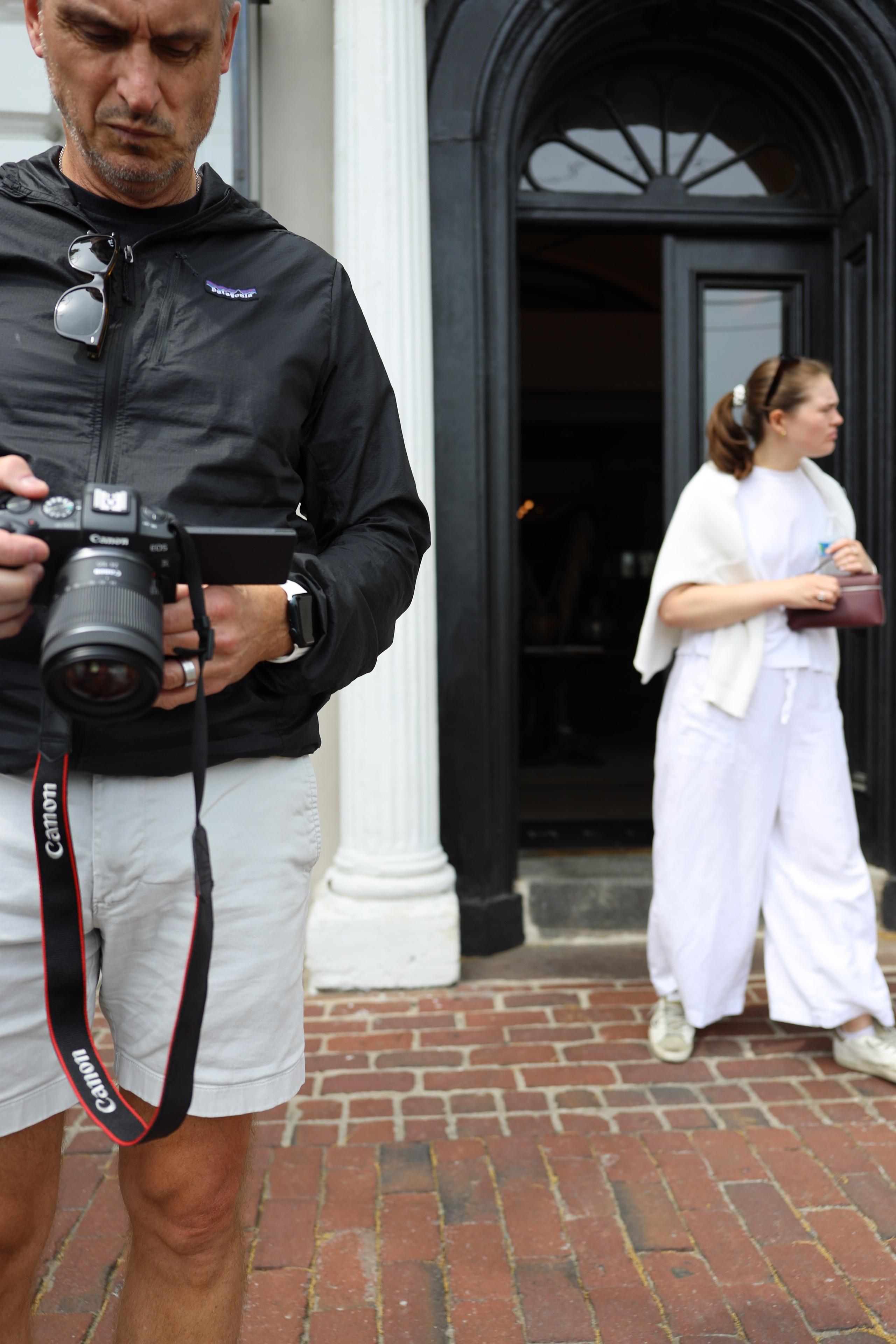
CHARLESTON WALK & SHOOT 2hr WORKSHOP (3-5pm)

SHALLOW DEPTH OF FIELD 2hr Workshop
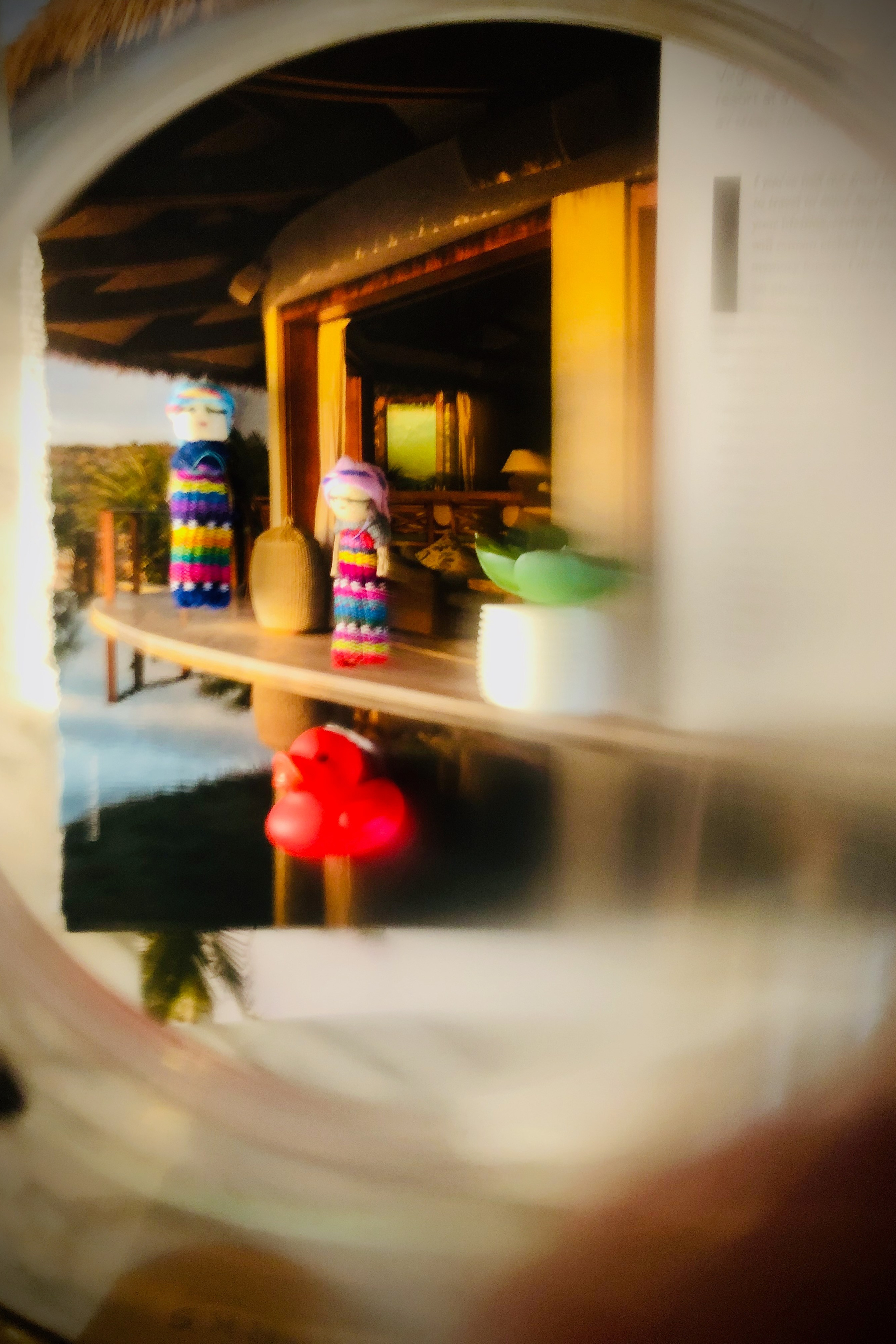
FLATLAY PHOTOGRAPHY IN A CAFÉ 2Hr Workshop
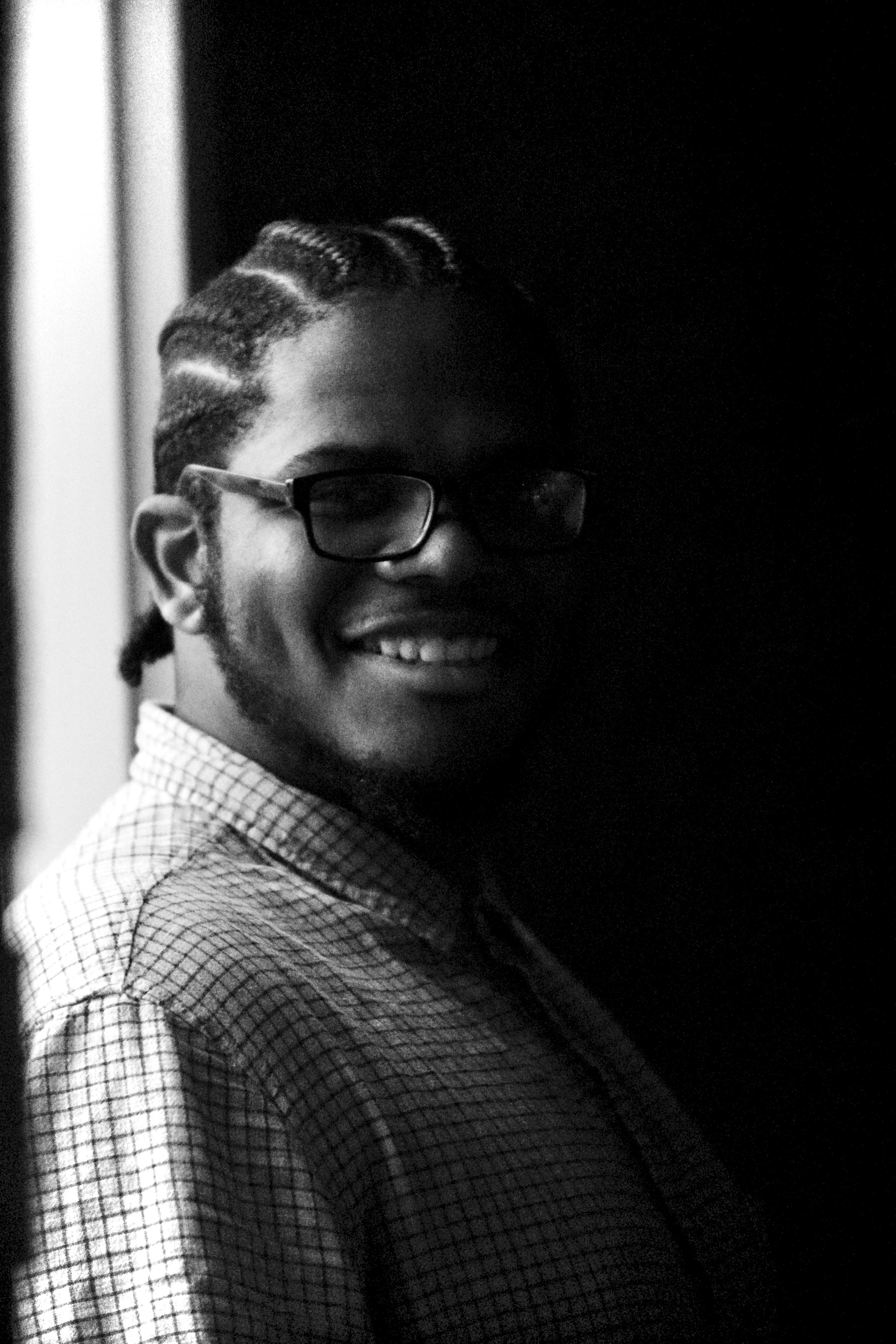
PORTRAITURE WITH NATURAL LIGHT 2hr Workshop
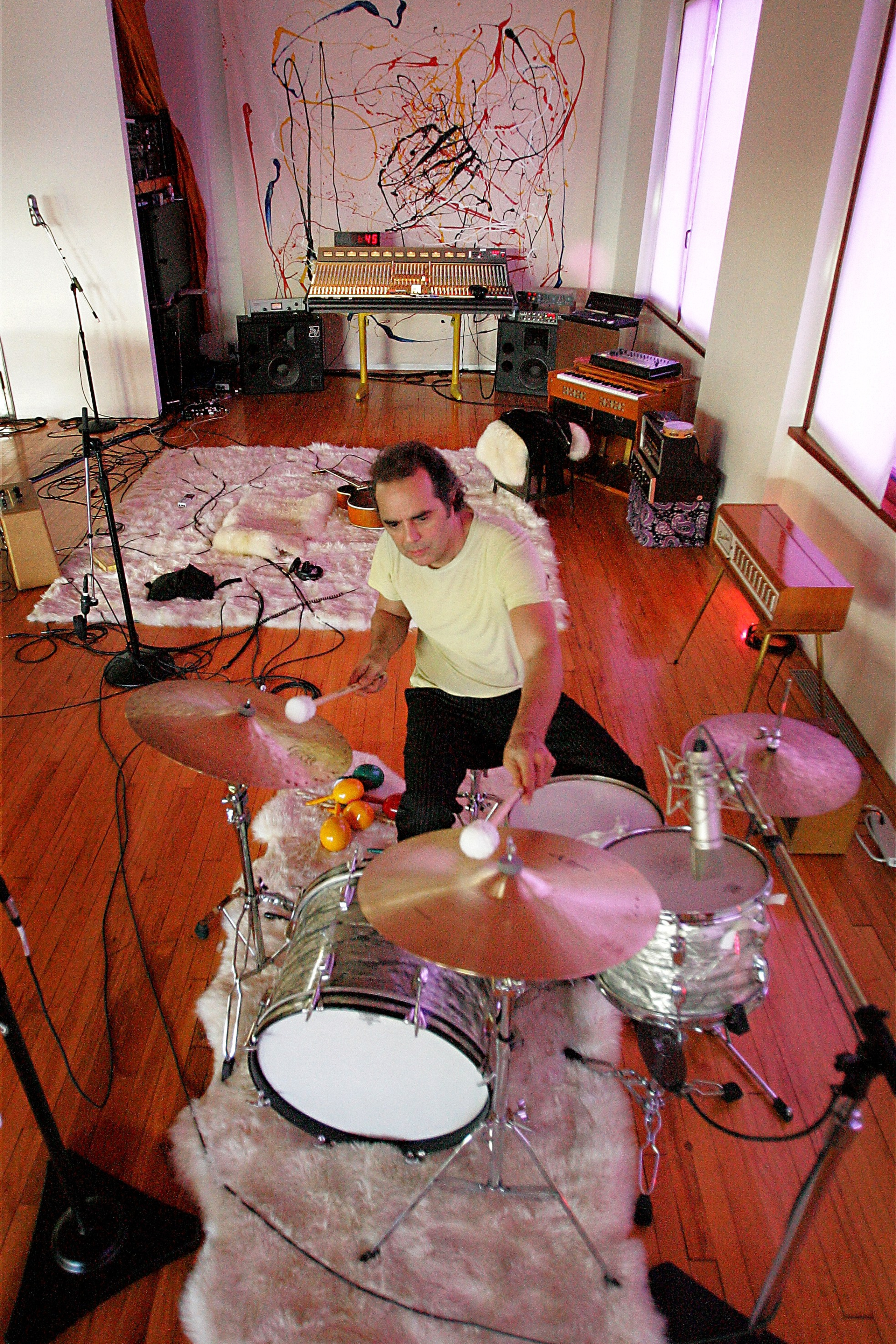
NIGHT PHOTOGRAPHY WALK — Based on the Spirit in the album “Oh Mercy”
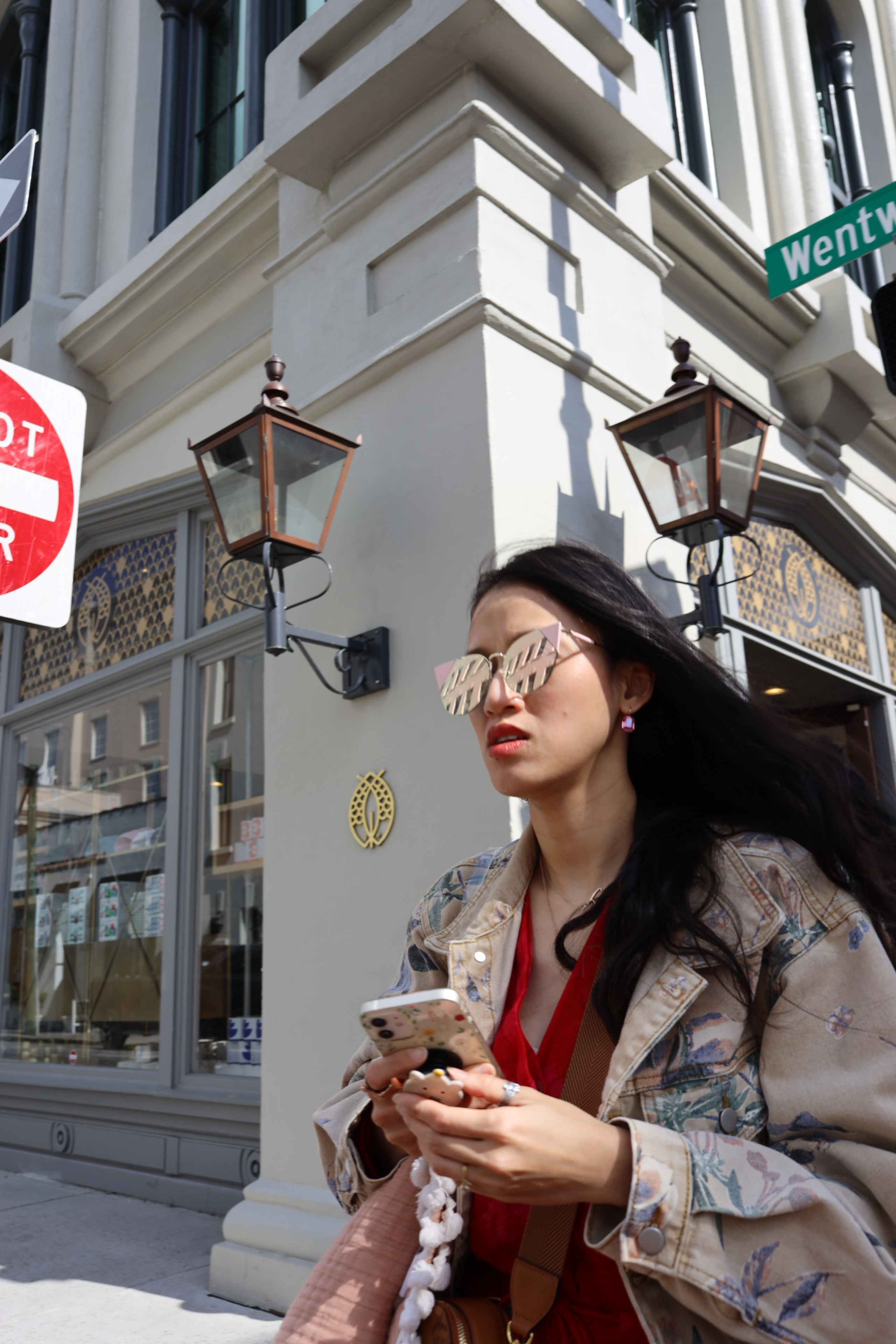
SMARTPHONE PHOTOGRAPHY 2hr Workshop
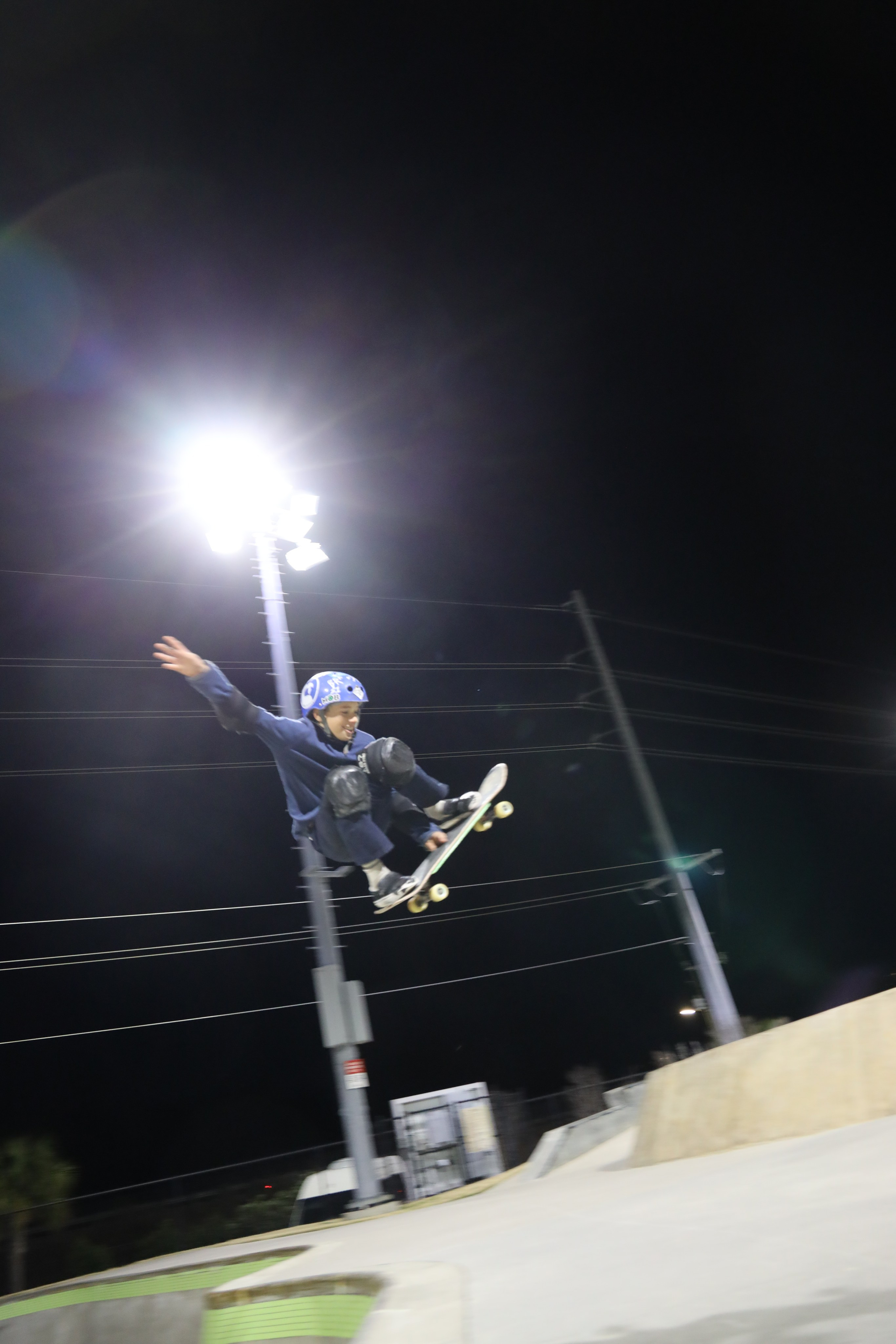
DOGTOWN PHOTOGRAPHY 2hr Workshop
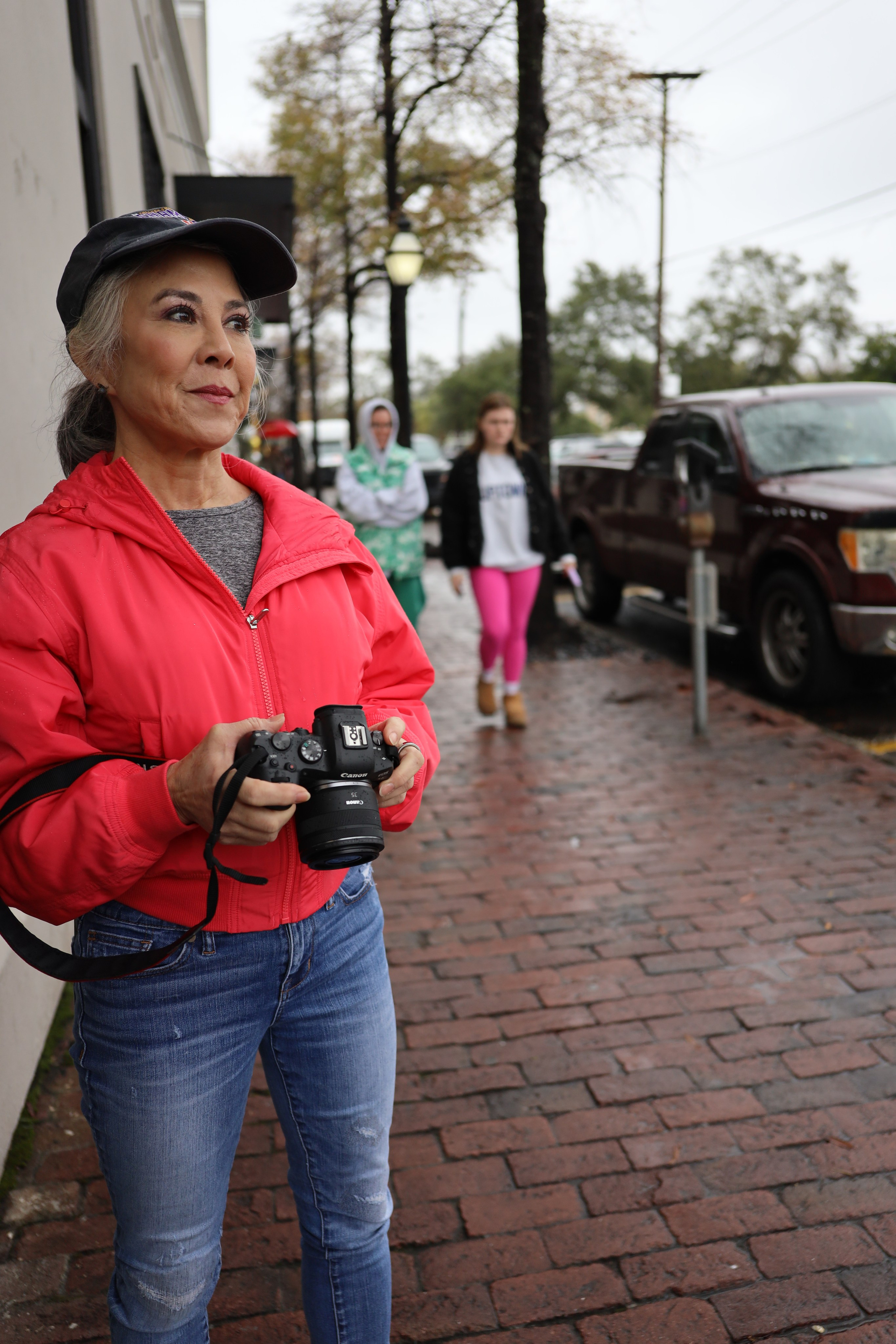
BEGINNER PHOTOGRAPHY 3hr Workshop
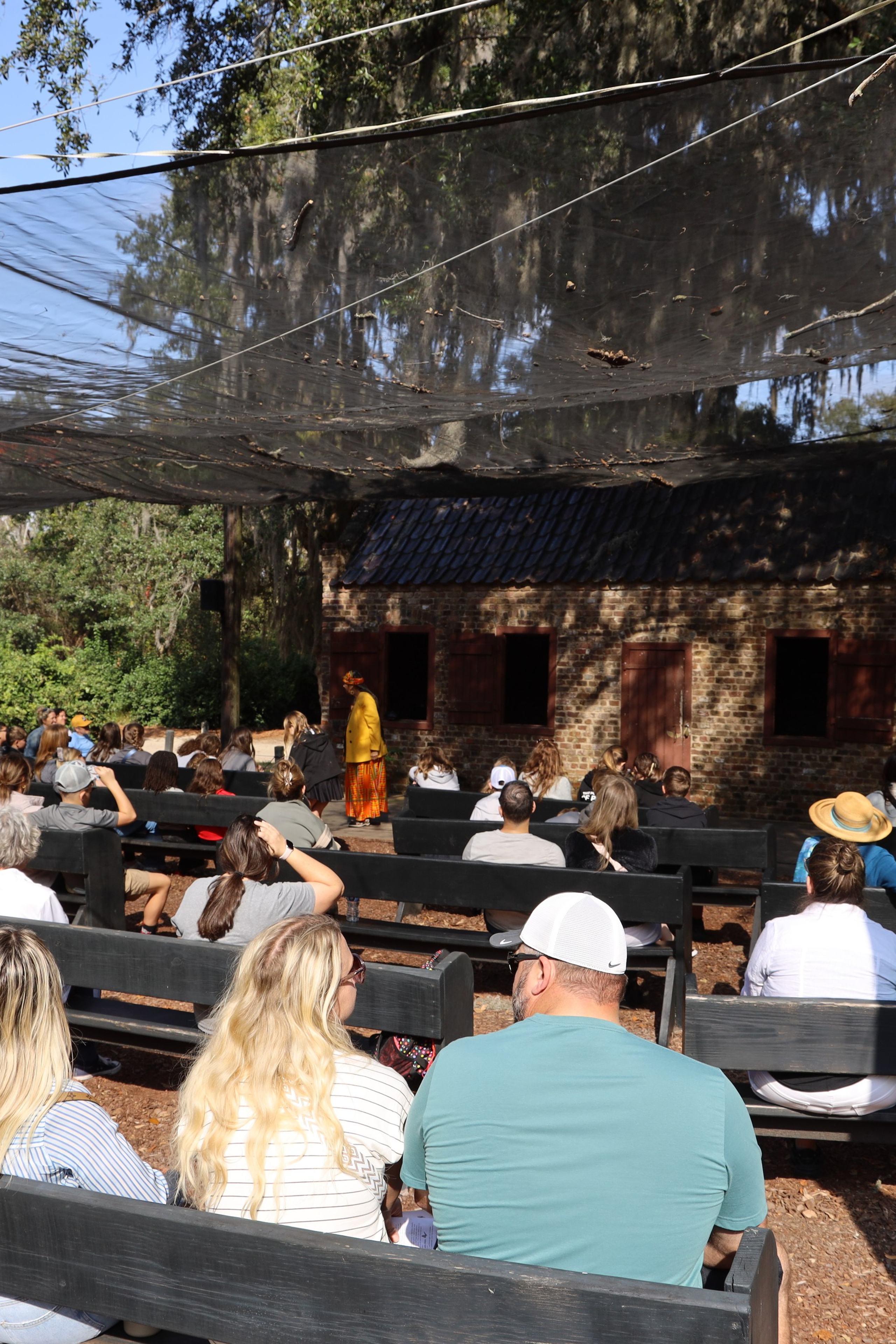
Five star review. Great ideas and creative thoughts concerning the art of photography. I loved walking around and catching spontaneous moments. Great teacher qualities.